

Bentley Systems anounced on Friday it had acquired Cesium, a major 3D geospatial firm credited with supporting major geospatial applications, for an undisclosed amount.
With the acquisition, Patrick Cozzi, Chief Executive, Cesium will become Bentley’s Chief Platform Officer and will report to Julien Moutte, the company’s Chief Technology Officer.
To date, Cesium’s 3D Tiles open standard remains widely used by some of the world’s tops companies, organisations, and developers. The Open Geospatial Consortium (OGC) also recognised 3D Tiles as a standard for 3D geospatial data in 2019.
Additionally, the firm’s Cesium ion software-as-a-Service (SaaS) platform empowers more than 1m active devices each month and has earned over 10m open-source solution downloads
Bentley iTwin Platform
Conversely, Bentley’s iTwin Platform leverages digital twins to empower architectural, engineering, and construction (AEC) companies worldwide. With the virtual tools, individuals and enterprises can develop and simulate infrastructure before they are built, leading to a host of use cases and technology stack integrations.
Designers can leverage building information modelling (BIM) and computer-aided design (CAD) data to create geospatial objects for use across the internet of things (IoT), engineering platforms, extended reality (XR), and others to simulate at-scale infrastructure with precision accuracy. Viewers can observe the final projects of individual and infrastructural assets from any angles and perspective.
Comments on Bentley-Cesium Acquisition
Nicholas Cumins, Chief Executive, Bentley said that 3D geospatial views were the “most intuitive way” for owner-operators and engineering service providers to retrieve and visualise infrastructure data along with their assets.
He added,
“With the combined capabilities of Cesium and iTwin, infrastructure professionals can make better informed decisions in full 3D geospatial context—all within a single, highly performant environment.”
Additionally, former Cesium chief Cozzi noted that the acquisition marked “an importan milestone” for his company, which it designed on open standards and open-source technologies.
He concluded,
“The combined power of our two organizations and our shared commitment to openness will provide new opportunities for growth and create greater value for an already flourishing developer ecosystem that ranges from small start-ups to global enterprises.”
In a specific use case, Komatsu, Japan’s largest construction equipment manufacturer, leverages Cesium’s geospatial solutions to track and monitor its construction sites, both in real-time and over time. Users can track their changes, compare architectural plans, and measure their infrastructure with key precision using digital twins.
Chikashi Shike, Executive Officer, Smart Construction Promotion Division, Komatsu, explained how the partnership with Cesium had “brough novel thinking to the construction industry.”
Using the solution’s advanced visualisation tools, the company could “deliver more precise insights” and enable customers to “make better, more informed construction decisions.”
Finally, speaking on the acquisition, Peter Rabley, Chief Executive, OGC, noted that the increasingly “data-centric” nature of infrastructure sectors had increased demand for open ecosystems.
Digital Twins Scale-Up Use Cases for the Enterprise
The news comes amid growing competition amongst several firms in the digital twins and industrial metaverse markets.
For example, at the Siemens Transform 2024 event in July, the German engineering giant highlighted the critical benefits of using its Siemens NX industrial metaverse platform to save time, energy, and resources for end users.
Companies such as Aeralis and the Briggs Automotive Company (BAC) showcased the value added to their workflows by using the immersive platform. Using the innovative tool, they explained and demoed how designers could use computational flow dynamics (CFDs) for virtual aerospace wind tunnel testing and data modelling, and could develop, test, and showcase automotive designs prior to their physical development, no matter the location of the product’s stakeholders.
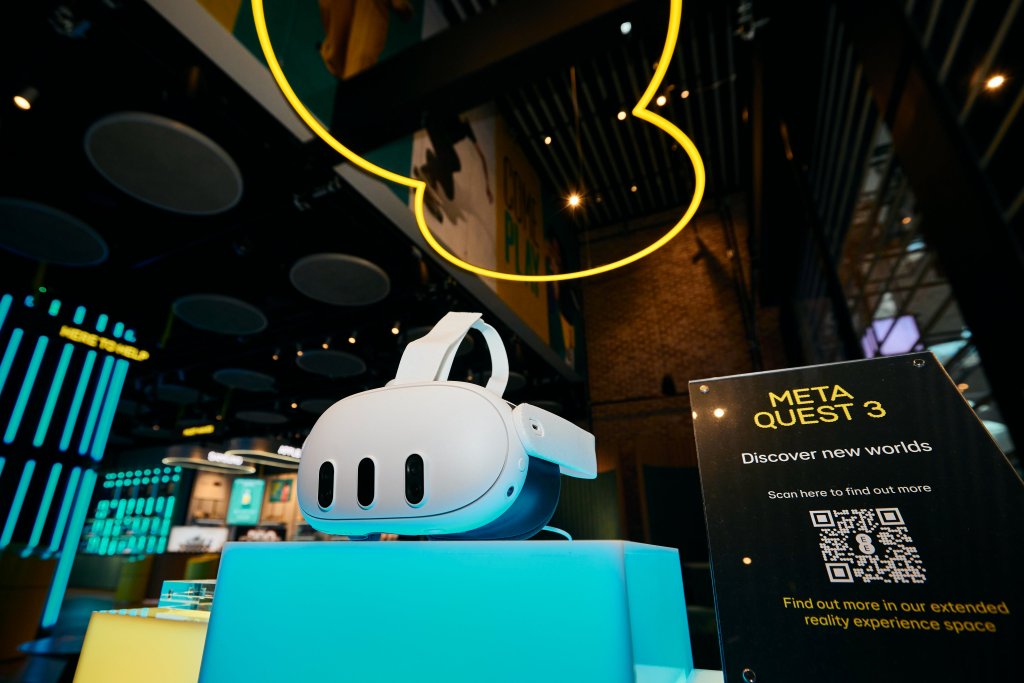
Finally, major BIM solution companies like Resolve have increased interoperability for the Meta Quest family of headsets, allowing construction firms to demo at-scale its 2D assets in 3D builidings virtually via the platform’s App Portal.
The solution also provided seamless integration for Autodesk Construction Cloud (ACC), Autodesk BIM 360, Procore, and Newforma Konekt, enhancing cross-platform interoperability for developers.
Like this article? Be sure to like, share, and subscribe for all the latest updates from D×M!


 Deus×Machina
Leave a comment